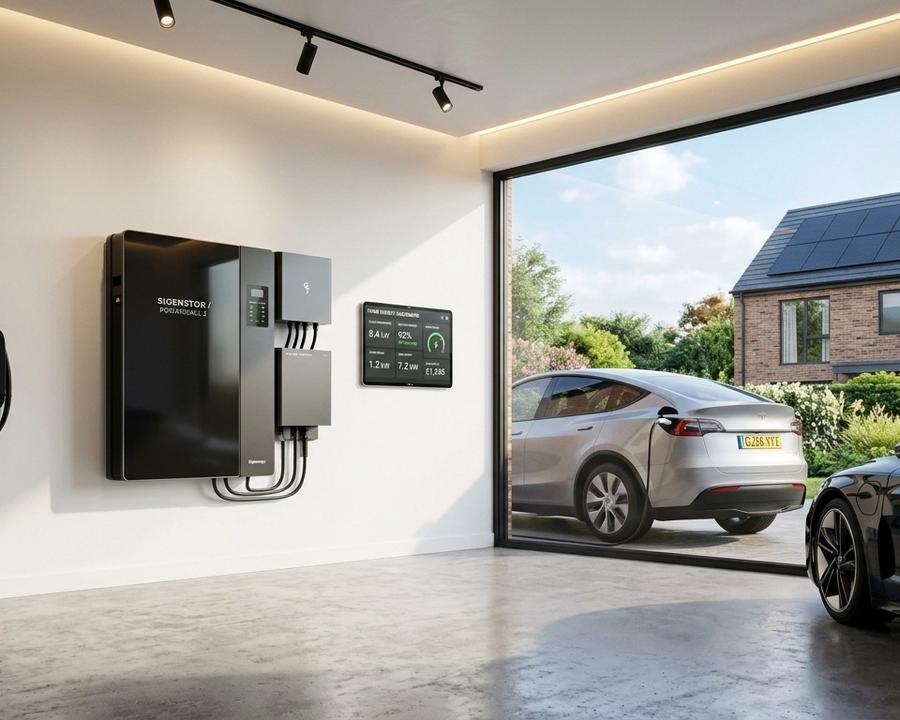
If you’re reading this in 2026, you already know that solar panels without a battery are like a car without a fuel tank. You’re generating all that lovely green energy during the day, but by the time you’re home and putting the kettle on, the sun is down and you’re back to paying peak grid prices.
At Herofix, we’ve seen the UK home battery market explode over the last few years. In 2026, the technology has moved fast. We’ve seen the arrival of the Tesla Powerwall 3, the massive scaling of GivEnergy, and the rise of "AI-managed" systems like Sigenergy.
So, how do you choose? Whether you’re looking to dodge high energy bills or you want to keep your EV topped up for free, this guide breaks down the top home battery storage options available right now.
1. Why 2026 is the Year of the Home Battery
A few years ago, batteries were a "nice to have." Today, they are the brain of the home. With the rise of Dynamic Pricing Tariffs (where electricity prices change every half hour), a smart battery doesn't just store energy; it trades it.
Modern systems now automatically:
- Store solar: Save your free energy for the evening.
- Grid trade: Buy cheap energy at 3 AM and use it (or sell it back) during the 5 PM peak.
- EV Syncing: Charge your car directly from your battery or solar array without blowing your home’s fuse.
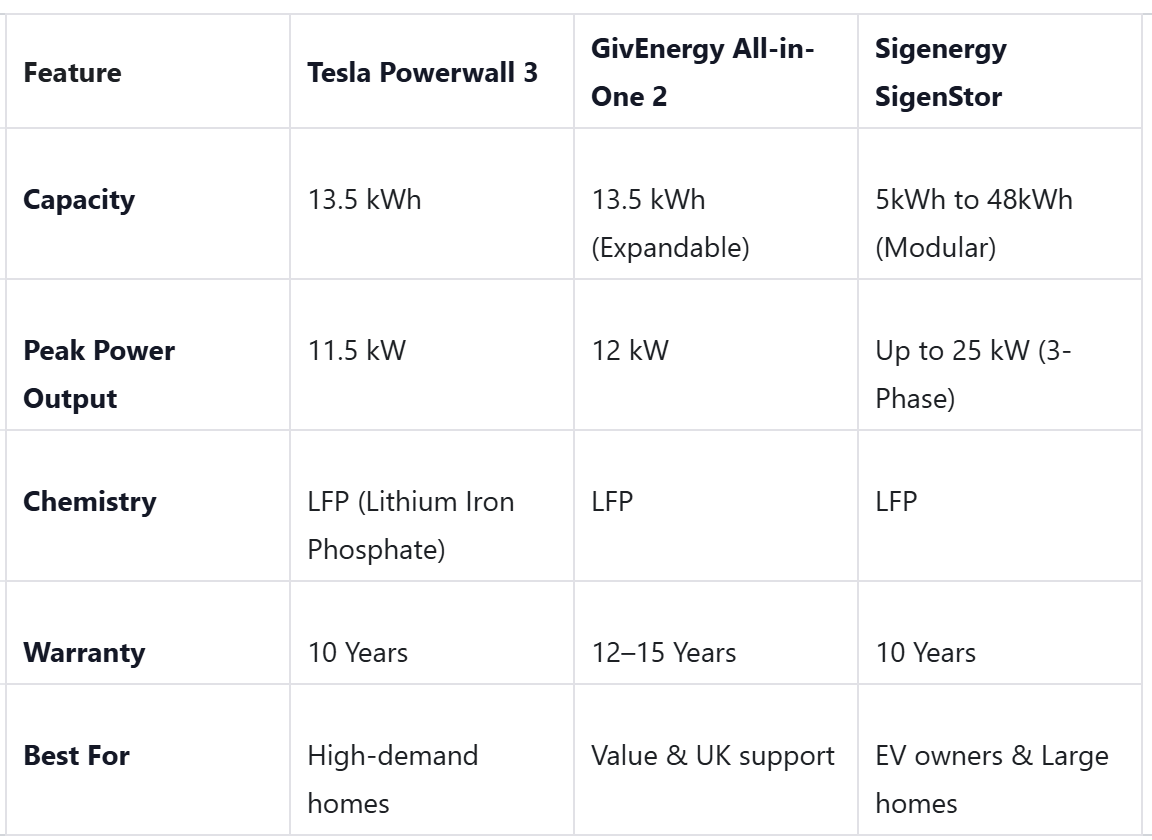
2. The Heavyweights: 2026 Comparison Table
Choosing a battery isn't just about the "kWh" number. It’s about how much power it can spit out at once (so you can run the oven and the shower) and how long it will last.
3. Tesla Powerwall 3: The All-Rounder
The Tesla Powerwall 3 remains the gold standard for many UK homeowners. It’s sleek, it’s powerful, and the software is incredibly polished.
Why we like it:
The Powerwall 3 isn't just a battery; it has a built-in solar inverter. This means if you’re installing a brand-new system, it’s much more efficient and requires less kit on your wall. With an 11.5kW continuous power output, it can handle almost anything a typical UK household throws at it.
The "Herofix" Verdict: Great for homeowners who want a "set it and forget it" system that looks fantastic in the garage.
The Tesla Powerwall 3 has a minimalist design that fits into any modern home.
4. GivEnergy All-in-One: The UK Favourite
GivEnergy has become a powerhouse in the UK market for one reason: they understand our weather and our grid. Their All-in-One 2 system is a modular beast.
Why we like it:
- Grid-tied Performance: It has a massive discharge rate, meaning it can power high-load appliances easily.
- UK-Based Support: If anything goes wrong, their support team is right here in the UK.
- Expansion: You can start with 13.5kWh and add more units later if you decide to buy a second EV or add an air source heat pump.
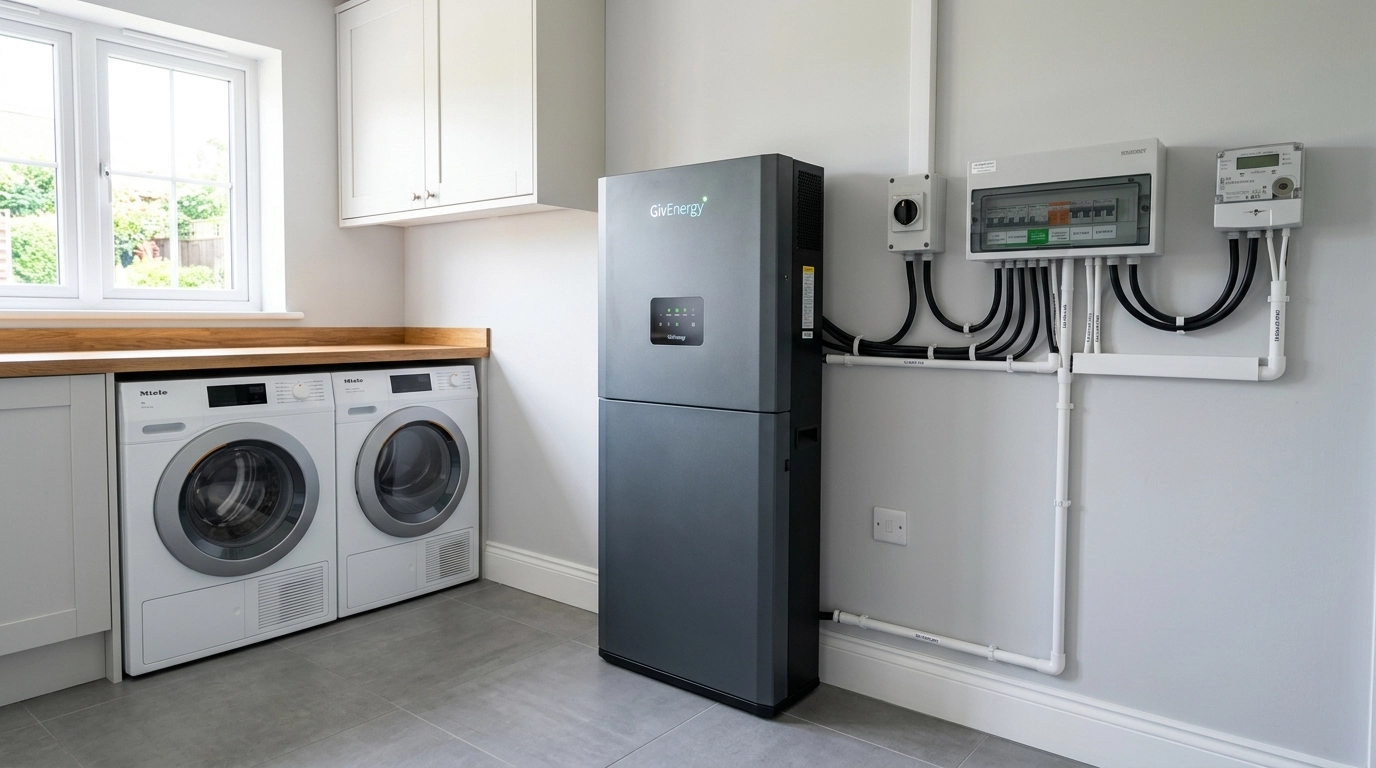
GivEnergy’s All-in-One system is a popular choice for UK homeowners who want flexible battery storage.
Check out our GivEnergy installation services to see how this could fit your home.
5. Sigenergy SigenStor: The "5-in-1" Powerhouse
If you’re looking for the cutting edge in 2026, Sigenergy is the name popping up everywhere. The SigenStor is a stackable, modular system that looks like a high-tech fridge-freezer but acts like a mini power plant.
Why we like it:
It integrates five major components: the solar inverter, battery storage, an EV DC charger, UPS (backup power), and an AI energy controller.
- V2H Ready: It’s one of the few systems fully ready for Vehicle-to-Home (V2H) technology, allowing your car to power your house during a blackout.
- Fast EV Charging: It can charge your car directly from DC power, which is significantly faster and more efficient than standard AC chargers.
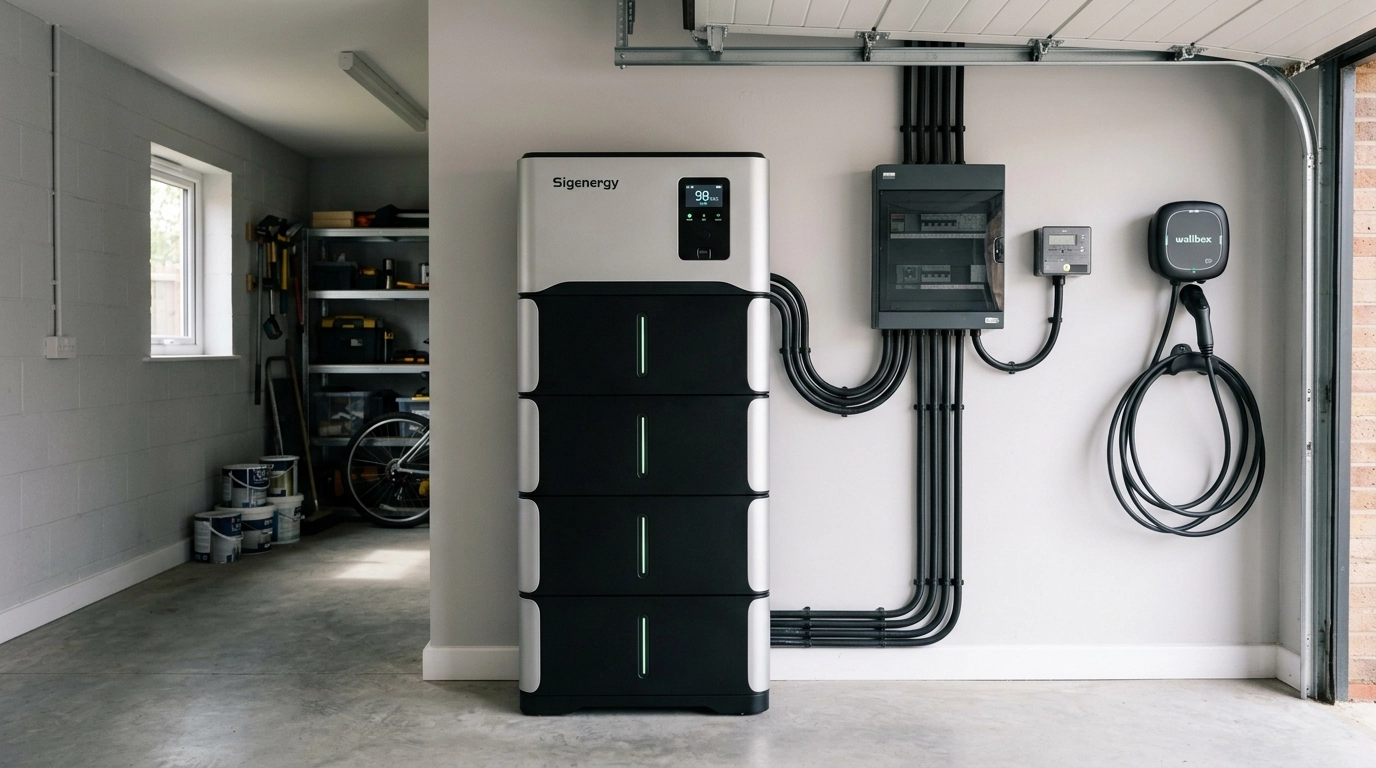
Sigenergy SigenStor stands out for its modular design and advanced EV-ready features.
6. What Should You Look For? (The Buyer’s Checklist)
Before you sign on the dotted line, here are four technical bits you need to check with your installer:
A. Useable Capacity vs. Total Capacity
Some brands say "10kWh battery," but you can only safely use 8kWh. All the brands we recommend: Tesla, GivEnergy, and Sigenergy: use LFP (Lithium Iron Phosphate) chemistry, which usually allows for 95% to 100% "Depth of Discharge." Don't buy a battery that you can only use half of!
B. Power Output
A big battery (storage) is useless if it has a small pipe (output). If your battery only puts out 3kW, but your kettle and washing machine need 5kW, you’ll be pulling that extra 2kW from the expensive grid. Aim for at least 5kW output for a standard home.
C. Warranty and Cycles
In 2026, you should expect a minimum of a 10-year warranty. Some brands, like GivEnergy, offer up to 15 years. Check if the warranty is "unlimited cycles" or capped at a certain amount of energy throughput.
D. App Experience
You’ll be checking your energy app more than your social media. Make sure the app is intuitive. The Tesla app is widely considered the best, but the mySigen app is catching up with its AI-driven energy forecasting.

Modern apps now show you exactly how much money you're saving by using stored solar energy.
7. How Much Does a Solar Battery Cost in 2026?
The good news? Prices have stabilized significantly since the early 2020s.
- Standard 10-13kWh system: Expect to pay between £6,000 and £9,000 including professional installation.
- Premium/Modular systems: For something like a full Sigenergy stack with EV integration, you could be looking at £12,000+.
The VAT at 0% on battery storage (when installed with solar or as a standalone upgrade to an existing solar system) is still a huge win for UK homeowners in 2026.
8. Is It Worth It? (The Payback)
Most of our customers at Herofix see their battery pay for itself in 6 to 8 years. When you consider these units have a lifespan of 15+ years, that’s nearly a decade of almost free electricity.
If you’re on a smart tariff like Octopus Flux or Agile, the payback is even faster because your battery will "buy low and sell high" automatically.
Ready to stop wasting your solar?
Choosing the "best" battery depends entirely on how you use energy. If you want simplicity and style, go Tesla. If you want the best UK-based support and modularity, go GivEnergy. If you’re an EV enthusiast who wants the most advanced tech on the market, Sigenergy is your winner.
At Herofix, we don't just sell boxes; we design systems that actually save you money.
Get a free, no-obligation battery quote today and let’s see which system fits your home best.
Found this guide helpful? Check out our other 2026 guides:
- Solar Panel Grants UK: 10 Things You Should Know
- Does Solar Panel Cost Really Matter? The Truth About Payback
- 7 Mistakes You’re Making With Air Source Heat Pumps
Note: Pricing and specifications are based on typical UK market data as of April 2026. Always consult with a certified Herofix installer for a site-specific survey.